12 Results for "

Pteridium caudatum Maxon

" in MedChemExpress (MCE) Product Catalog:
Products (12)

12 Results for "Pteridium caudatum Maxon" in MCE Product Catalog:

5
5 Cited Publications
Referencia número: HY-101213
No. CAS: 145075-81-6
Pureza:  98.84%
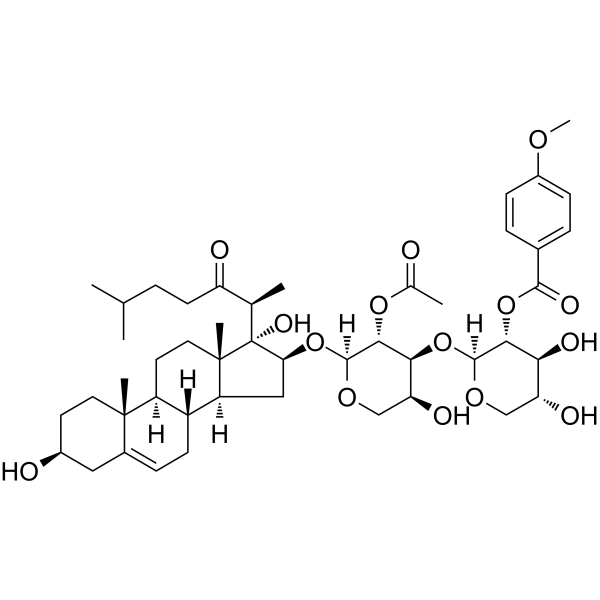
OSW-1, isolated from Ornithogalum caudatum, is a specific antagonist of ooxysterol binding protein (OSBP) and OSBP-related protein 4 (ORP4) with GI50s in the nanomolar range in human cancer lines.
loading...
    loading...
Referencia número: HY-N1570
No. CAS: 34175-96-7
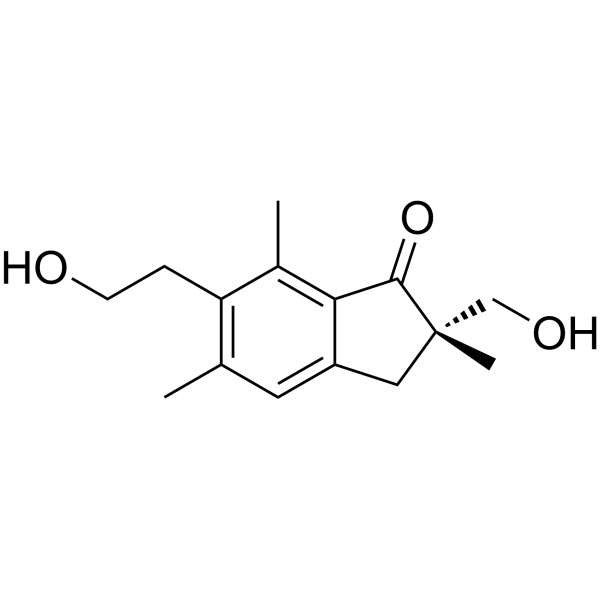
Pterosin B is an orally active indanone. Pterosin B can be obtained from Pteridium aquilinum. Pterosin B is a Sik3 signaling inhibitor. Pterosin B inhibits Klf5 expression and reduces β-amyloid deposition. Pterosin B prevents chondrocyte hypertrophy and osteoarthritis in mice. Pterosin B inhibits cardiomyocyte hypertrophy, improves cognitive impairment, and lowers blood glucose. Pterosin B can be used in research on arthritis, Alzheimer's disease, pathological cardiac hypertrophy and diabetes .
loading...
    loading...
Referencia número: HY-N7912
No. CAS: 35910-16-8
Synonyms: (2S)-Pterosin A
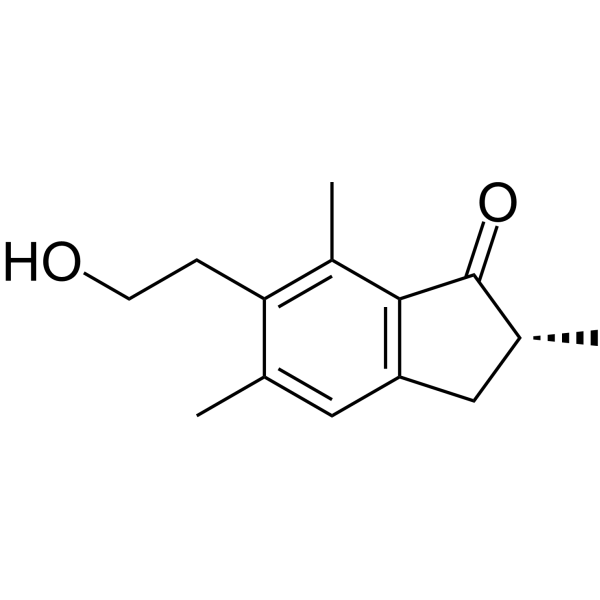
Pterosin A ((2S)-Pterosin A) is a sesquiterpene compound. Pterosin A is an orally active AMPK activator with anti-diabetic effect. Pterosin A can promote glucose uptake, increase serum insulin, and improve hyperglycemia and glucose intolerance. Pterosin A can prevent insulin-secreting cells death and reduce ROS production. Pterosin A can be used for the research of metabolic disease, such as diabetes .
loading...
    loading...
Referencia número: HY-N7790
No. CAS: 112516-43-5
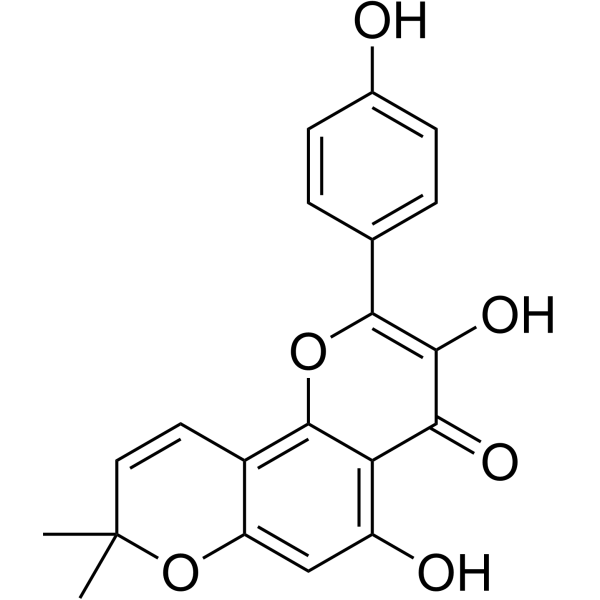
Citrusinol is a natural product isolated from D. caudatum. Citrusinol has anticancer activity and inhibits the proliferation and migration of human hepatocytes HepG 2 .
loading...
    loading...
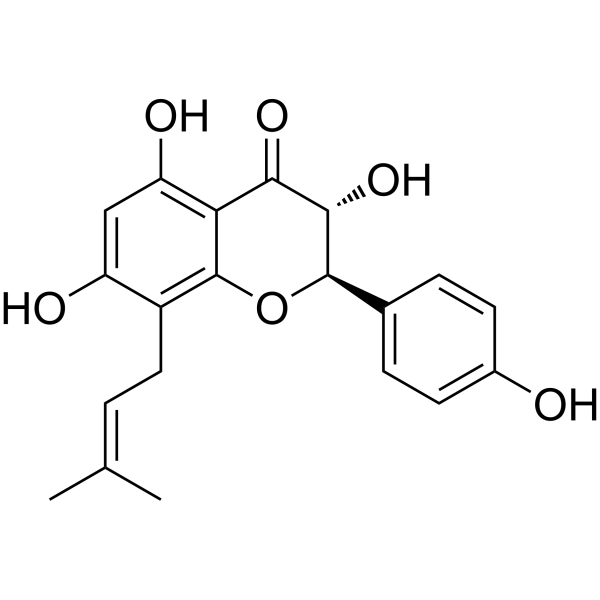
Referencia número: HY-N8726
No. CAS: 52589-20-5
Neophellamuretin is a prenylated flavanone flavonol with both free radical scavenging activity and antifungal activity. Neophellamuretin can be used in studies related to tinea pedis .
loading...
    loading...
Referencia número: HY-N1570R
No. CAS: 34175-96-7
Pterosin B (Standard) is the analytical standard of Pterosin B (HY-N1570). This product is intended for research and analytical applications. Pterosin B is an indanone. Pterosin B can be obtained from Pteridium aquilinum. Pterosin B is a Sik3 signaling inhibitor. Pterosin B inhibits Klf5 expression and reduces β-amyloid deposition. Pterosin B prevents chondrocyte hypertrophy and osteoarthritis in mice. Pterosin B inhibits cardiomyocyte hypertrophy, improves cognitive impairment, and lowers blood glucose. Pterosin B can be used in research on arthritis, Alzheimer's disease, pathological cardiac hypertrophy and diabetes .
loading...
    loading...
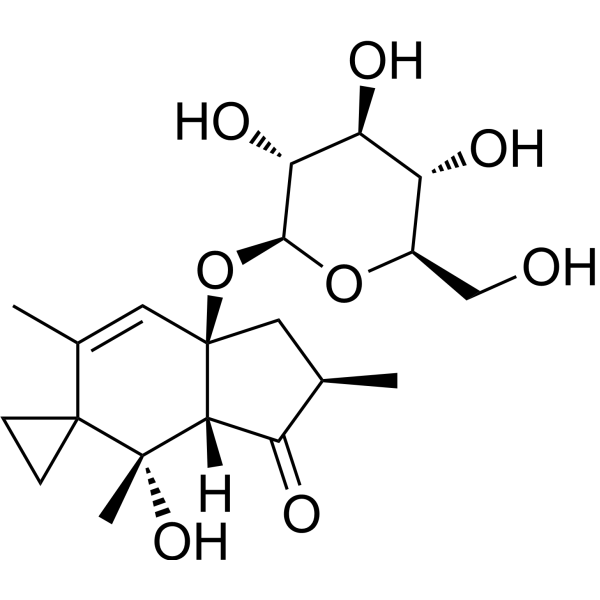
Referencia número: HY-N7882
No. CAS: 87625-62-5
Synonyms: Braxin C; Aquilide A
Ptaquiloside is a sesquiterpene glycoside isolated from Pteridium aquilinum var.latiusculum and has carcinogenic activity .
loading...
    loading...
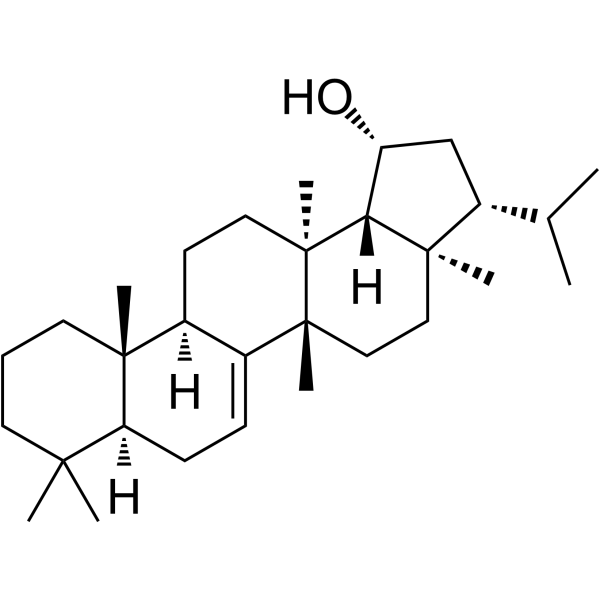
Referencia número: HY-N9304
No. CAS: 70588-12-4
Synonyms: 19a-Hydroxyferna-7,9(11)-diene
Target:  

Others

Áreas de investigación:  

Others

Fern-7-en-19α-ol (9a-Hydroxyferna-7,9(11)-diene) is a triterpenoid compound isolated from Adiantum caudatum .
loading...
    loading...
Referencia número: HY-N18393
No. CAS: 88797-64-2
Caudatin 3-O-β-D-glucopyranosyl-(1→4)-β-D-oleandropyranosyl-(1→4)-β-D-cymaropyranosyl-(1→4)-β-D-cymaropyranoside (compound 6) is a C-21 steroidal glycoside that can be isolated from the roots of Cynanchum otophyllum and Cynanchum caudatum .
loading...
    loading...
Referencia número: HY-N17500
No. CAS: 54854-89-6
Pterosin O is a Pterosin-type sesquiterpenoid. Pterosin O can be isolated from M. strigosa and Pteridium aquilinum (L.) Kuhn. Pterosin O may be regarded as chemotaxonomic markers for M. strigosa .
loading...
    loading...
Referencia número: HY-N8640
No. CAS: 162602-04-2
5,7-Dimethoxy-3′,4′-methylenedioxyflavan-3-ol is a Flavonoids product that can be isolated from the herbs of Pteridium aquilinum var. latiusculum .
loading...
    loading...
Referencia número: HY-184873
No. CAS: 463-79-6
Target:  

Others

Áreas de investigación:  

Infection Others

Carbonic acid is a diprotic acid, acidulant and anesthetic. Carbonic acid penetrates living cells more easily than most other acids, exhibits stronger toxicity than inorganic acids at equivalent concentrations, and exacerbates ocean acidification. Carbonic acid binds reversibly to cellular proteins, acidifies cell sap and protoplasmic inclusions, inhibits Paramecium growth and various cellular functions, induces reversible cellular changes, produces lethal effects at high doses, decomposes into carbon dioxide and H2O, and participates in the maintenance of physiological pH balance .
loading...
    loading...
  • 1

